New York, September 2026
She was due to return to Algeria in October. Her friends were expecting her. In July, a presidential decree had granted her Algerian citizenship, more than sixty years after she had chosen the country as her own.
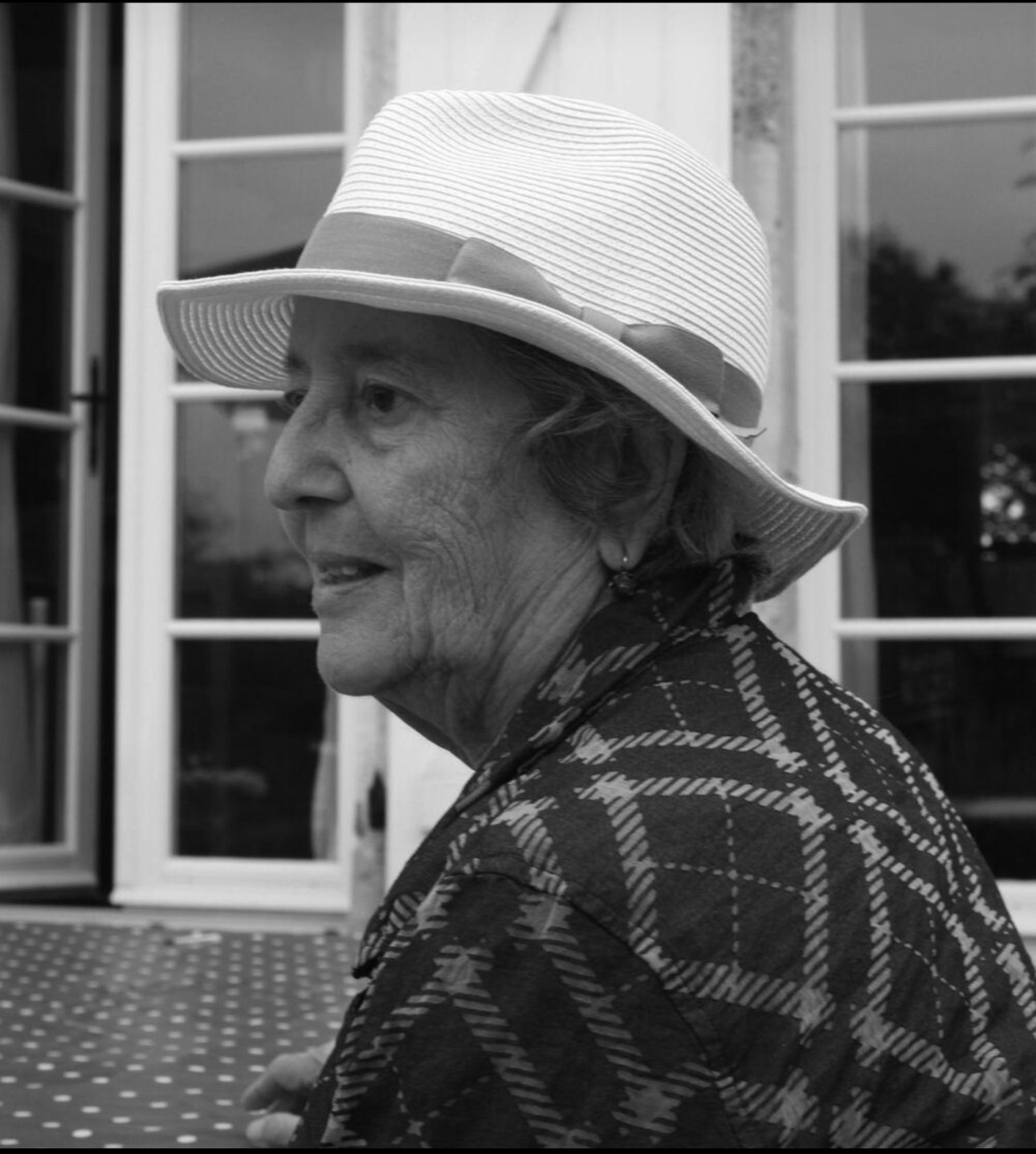
Elaine Mokhtefi would not make that final journey. She died in a New York hospital on 11 September 2026.
The story could end with this belated gesture of recognition. But that would poorly convey what her life had been. Elaine Klein did not become Algerian after a long, comfortable period of residence. She had taken Algeria’s side before she had ever seen it.
Accra, 1960: Frantz Fanon
The scene takes place in Ghana. Elaine is working on the organisation of an international youth conference. Among the Algerians present is Mohamed Sahnoun. With him comes Frantz Fanon, the Provisional Government of the Algerian Republic’s representative in Africa.
Fanon is not yet the great intellectual icon who will be quoted everywhere. He is a doctor, an activist and a diplomat for a revolution at war.
Elaine listens to him speak of the psychological devastation inflicted on Algerians by colonisation and war. They become friends. One evening, they go dancing together in Accra. A photographer catches them. Fanon demands that the photograph be destroyed; it is nevertheless published in the local press.
In her memories, Elaine also preserves a remark from Fanon that is more personal than political. When she tells him one day of her need to lean on someone, he advises her instead to maintain her independence and pursue her own goals.
A few months later, their paths cross again in the United States, where Fanon, now ill, comes for treatment.
The encounter already says something about Algeria in those years. An American woman from New York and a Martinican who became a psychiatrist in Algeria find themselves committed to the same independence struggle. Neither had been destined for it.
New York: A War Is Also Fought at the United Nations
Elaine returns to the United States in 1960. Mohamed Sahnoun helps her join the Algerian Provisional Government’s small New York office.
The war is being fought in Manhattan as well as in the guerrilla strongholds. She is at the heart of the struggle. Press releases, pamphlets, contacts with journalists, diplomatic delegations, lobbying at the United Nations: they must persuade people that Algeria is not an internal French affair but a question of decolonisation.
Then comes 1962. With independence achieved, she makes a fairly simple decision: she goes to live in Algeria. She has never set foot there.
Algiers, 1964: Malcolm X Takes the Same Route
Elaine is already living in Algiers when Malcolm X arrives in the capital in spring 1964. They do not meet, but their presence in the “Mecca of Revolutionaries” is no coincidence.
Malcolm X travels through an Algeria that has been independent for less than two years. He meets leaders, speaks about the Algerian revolution and sees its experience as proof that a local struggle can be brought onto the international stage.
Five years later, the Black Panthers will take the same route.
Why Algiers? Because a country that had just defeated a major colonial power possessed a particular authority among those seeking to overturn other forms of domination.
June 1969: A Knock at a Door
One night, the telephone rings. Charles Chikerema, the representative in Algiers of a Zimbabwean liberation movement, calls Elaine. An American has just arrived and needs help. She heads down to the small Hôtel Victoria, between the Casbah and the European-built city. Four flights to climb. She knocks.
Eldridge Cleaver opens the door. Behind him, Kathleen Cleaver, eight months pregnant, is lying on the bed.
Eldridge Cleaver is then one of the Black Panther Party’s best-known figures. Wanted in the United States, he has left the country, passed through Cuba and now wants to settle in Algiers. Elaine recalls that night with great precision in her book.
She knows how the new Algerian state works and the people in the FLN responsible for foreign liberation movements. She acts as interpreter, mediator and intermediary. She helps the Panthers obtain accommodation, a telephone line and, gradually, a recognised political presence in Algiers.
A photograph shows them together in 1969 at FLN headquarters: Eldridge Cleaver and Elaine Mokhtefi seated side by side in Algiers. The image almost encapsulates an era.
July 1969: For Ten Days, Algiers Becomes the World
Only a few weeks after the Cleavers’ arrival, the first Pan-African Cultural Festival of Algiers begins. Elaine is not invited as a spectator. She is organising it.
Mohammed Seddik Benyahia has recruited her to the Ministry of Information. She speaks English, knows international networks and has already proved herself in Algeria’s diplomatic struggle at the United Nations.
For months, there are delegations to welcome, problems to solve, translations to provide and connections to make.
Delegations from across the continent parade through the capital. Archie Shepp plays. Miriam Makeba is there. Nina Simone too. Liberation movements meet artists and intellectuals. The Black Panthers open their cultural centre in the city. Elaine will particularly remember managing, with Miriam Makeba, to get Nina Simone onto the stage.
Decades later, when asked about those ten days, she will say that the festival had been “visionary” for her. She felt she was witnessing the emergence of a new world: an Africa that would no longer be the playground of Cold War powers but an autonomous political actor.
Why Did They All Come to Algiers?
Perhaps that is the real question left by Elaine Mokhtefi’s life. Fanon. Malcolm X. Eldridge and Kathleen Cleaver. Miriam Makeba. Southern Africa’s liberation movements. Palestinian, Vietnamese, Angolan and Mozambican activists…
They did not all share the same ideology. They came neither from the same country nor from the same culture, and sometimes not even from the same struggle. But for a few years, their paths passed through Algiers.
Algeria had just demonstrated that a colonisation presented as irreversible could be defeated. And not just any colonisation: 132 years of settler colonialism, imposed by a major Western power that legally regarded Algeria as part of its own territory.
Victory gave the country something money or diplomacy could not buy: revolutionary legitimacy.
Liberation movements obtained offices in Algiers. The country gave them material support, diplomatic platforms and international visibility. The capital became a crossroads where newly independent states, guerrillas still at war, Third World activists and radical Western organisations met.
Elaine Mokhtefi had not merely made a pilgrimage to the “Mecca of Revolutionaries”; she had found her place there.
Born Elaine Klein in New York, she had chosen to bind her destiny to Algeria’s. After independence, she came to help build the country. Later, she married Mokhtar Mokhtefi, a veteran of the War of Liberation and a writer.
On 11 September 2026, she died in New York.
A few weeks earlier, Algeria had finally, officially given her the citizenship that, in a sense, she had chosen more than sixty years before.
Sources
- https://www.aps.dz/fr/algerie/actualite-nationale/mtxgz5jd-deces-a-98-ans-de-la-grande-militante-anticolonialiste-americaine-elaine-mokhtefi
- https://www.tsa-algerie.com/deces-delaine-klein-mokhtefi-lamericaine-qui-a-embrasse-la-cause-algerienne/
- https://www.thenation.com/article/archive/elaine-mokhtefi-algiers-book-review/
- https://www.versobooks.com/blogs/news/3723-frantz-fanon-in-algiers
- https://vault.fbi.gov/Malcolm%20X/Malcolm%20X%20Part%2021/at_download/file
- https://www.lrb.co.uk/the-paper/v39/n11/elaine-mokhtefi/diary
- https://www.thenationalnews.com/arts-culture/books/black-panthers-revolution-and-then-exile-an-american-s-time-in-algeria-1.872006
- https://csalateral.org/issue/10-1/remembering-le-premier-festival-culturel-panafricain-d-alger-1969-interview-kimmel/
- https://www.versobooks.com/products/760-algiers-third-world-capital